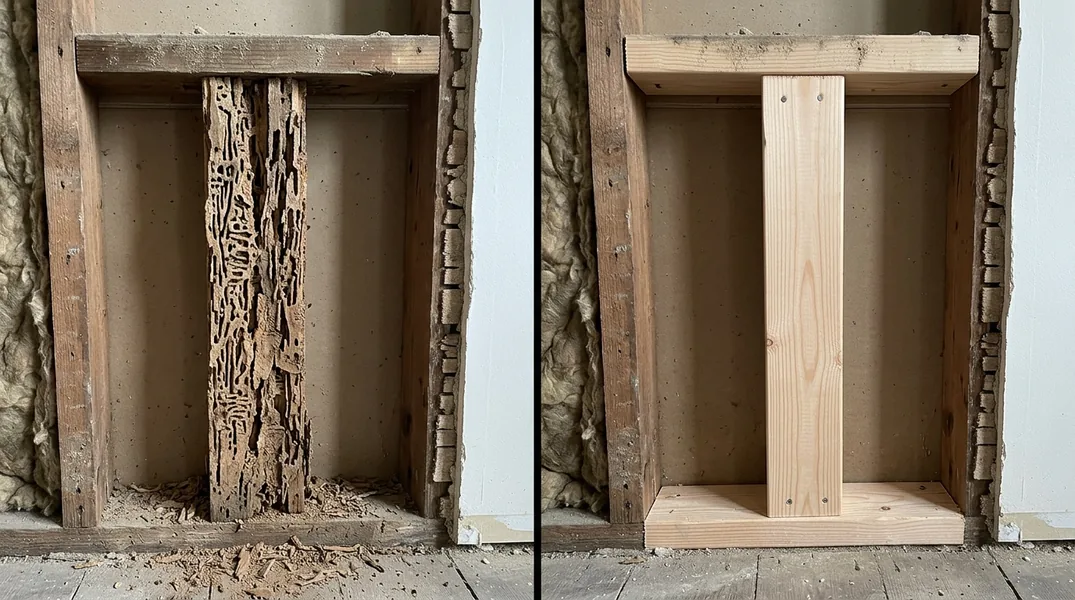
Dry Rot vs Termite Damage: Understanding the Difference
When you discover soft, discolored wood in your Buffalo home, your first instinct might be panic. But before you assume the worst, it's important to understand what you're actually dealing with. Dry rot and termite damage are two of the most common wood-destroying problems homeowners face, yet they have very different causes, progression patterns, and repair requirements.
Dry rot is a fungal decay that occurs when wood moisture content rises above 20 percent, creating the perfect environment for wood-destroying fungi to thrive. Termites, on the other hand, are insects that actively consume wood as a food source. While both can cause serious structural damage, the way they damage wood, the speed at which they work, and the treatment approaches differ significantly. Understanding these differences is crucial for getting the right help quickly and protecting your home's structural integrity.
What Does Wood Rot Look Like? Visual Signs of Dry Rot
Identifying dry rot early can save you thousands in repair costs. Dry rot typically appears as wood that looks spongy, soft, or crumbly to the touch. The affected wood often develops a dark brown or grayish color, and you may notice it feels lighter than healthy wood of the same size. One of the most telltale signs is the presence of fine, thread-like fungal strands (called mycelium) on or near the damaged wood, which can appear white, gray, or orange depending on the fungal species.
Another characteristic feature of dry rot is the development of deep cracks in the wood, often forming a distinctive cube-like or cross-hatch pattern. This happens because the fungus breaks down the wood's cellular structure in a way that causes it to shrink and crack perpendicular to the grain. You might also notice a musty, earthy smell near affected areas. In Buffalo's climate, where moisture from snow melt, humidity, and seasonal changes is common, dry rot tends to develop in poorly ventilated basements, crawl spaces, and around areas where water has been allowed to accumulate.
Signs of Termite Damage in Wood: What to Look For
Termite damage presents differently than dry rot, and recognizing the distinction is vital. Termites leave behind hollow galleries or tunnels within the wood as they consume it from the inside out. This means the surface of the wood may appear relatively intact while the interior is largely destroyed. When you tap on wood affected by termites, it often sounds hollow or papery. Additionally, termite damage typically follows the grain of the wood rather than creating the cross-hatch cracking pattern associated with dry rot.
You may also notice other signs of termite activity, including mud tubes that termites construct to travel between their nest and food sources, discarded termite wings near windowsills or light sources, or small piles of sawdust-like droppings (called frass) beneath affected wood. Termite damage tends to progress more rapidly than dry rot because the insects are actively feeding. Unlike dry rot, which requires specific moisture conditions, termites can cause damage in wood that appears relatively dry, making them a threat in more areas of your home. If you suspect termite damage, professional Termite Damage Repair is essential to prevent the infestation from spreading.
How Moisture and Environment Affect Each Problem
The environmental conditions that lead to dry rot versus termite infestation are important to understand because they affect both prevention and treatment. Dry rot requires moisture to develop, which is why it's commonly found in basements, crawl spaces, around plumbing leaks, and in areas where gutters are clogged or downspouts direct water toward the foundation. The fungal spores that cause dry rot are present everywhere in the environment, but they only become a problem when wood moisture levels exceed 20 percent. This is why proper ventilation, drainage, and moisture control are critical prevention strategies.
Termites, by contrast, are attracted to wood regardless of moisture content, though they do prefer some level of humidity. They can enter your home through cracks in the foundation, gaps around pipes, or wood that makes direct contact with soil. Once inside, they establish colonies that can grow to include thousands or even millions of individuals, all working to consume your home's wooden structure. The key difference is that dry rot can sometimes be prevented through better moisture management, while termites require active prevention measures like soil treatment, barriers, or regular inspections. In the humid climate of western New York, both threats are real, making professional assessment crucial for homeowners.
Wood Rot & Dry Rot Repair Near Me: When to Call a Professional
If you've identified signs of either dry rot or termite damage in your home, it's time to contact a professional. While small areas of dry rot might seem manageable, the fungal decay can spread rapidly if the underlying moisture problem isn't addressed. Similarly, even a small termite infestation can grow into a major structural threat within months. Wood Rot & Dry Rot Repair requires not only removing the damaged wood but also identifying and eliminating the moisture source to prevent recurrence.
Buffalo Carpentry specializes in diagnosing and repairing both dry rot and termite damage. Our team can conduct a thorough inspection to determine exactly what you're dealing with, assess the extent of the damage, and recommend the most cost-effective repair strategy. Depending on the severity and location of the damage, repairs might involve simple wood replacement, or they could require more extensive work like Floor Joist & Subfloor Repair or even Beam Replacement & Load-Bearing Wall Removal if structural integrity is compromised. Call us at (716) 322-4288 to schedule your free estimate and get peace of mind knowing your home is in capable hands.
Prevention Strategies: Protecting Your Buffalo Home
The best approach to both dry rot and termite damage is prevention. For dry rot, focus on moisture management: ensure your gutters and downspouts are clean and directing water away from your foundation, fix any plumbing leaks promptly, improve ventilation in basements and crawl spaces, and consider installing a sump pump or dehumidifier if moisture is a persistent issue. Inspect your home regularly for signs of water intrusion, especially after heavy rain or snow melt. Keep wood-to-soil contact to a minimum by elevating decks, porches, and other wooden structures, and maintain at least 6 inches of clearance between soil and wooden siding.
Termite prevention involves similar vigilance. Have your foundation inspected regularly for cracks or gaps where termites might enter. Remove wood debris, old stumps, and mulch piles from around your home's perimeter. Keep firewood stored away from the house, and avoid storing lumber or wood scraps directly on the ground. Consider having a pest control professional apply a preventive soil treatment around your foundation. Regular inspections, whether you do them yourself or hire a professional, are your best defense. If you notice any concerning signs, don't wait to get them checked out. Buffalo Carpentry is here to help with expert assessment and repair when problems do arise. Reach out to us at (716) 322-4288 or visit our website to learn more about protecting your home.
Looking for a professional carpentry contractor in Buffalo? Buffalo Carpentry responds fast for all your carpentry needs.
Get a Free QuoteOur services: Wood Rot & Dry Rot Repair · Termite Damage Repair · Floor Joist & Subfloor Repair