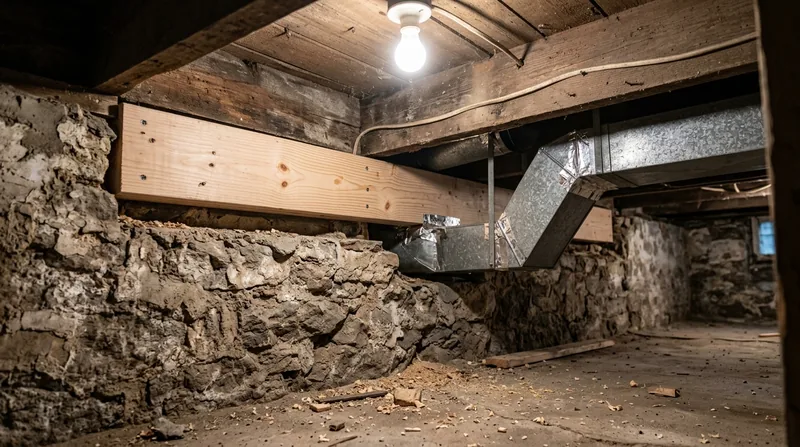




Buffalo's housing stock spans from grand Victorian mansions in Allentown and Elmwood Village to working-class wood-frame two-family homes across the East Side, brick bungalows in North Buffalo, and post-war ranches throughout the suburbs. Nearly all of these rest on wood-frame floors built from Douglas fir, oak, or hemlock joists and subfloor sheathing. Under Western New York's legendary lake-effect snowbelt climate, freeze-thaw cycles, snow load stress, and ice-dam moisture drive floor joist and subfloor repair as a critical maintenance need across the region's century-old wood-frame homes. Sagging, bouncy, or soft floors usually trace to damaged joists or rotted subfloor caused by moisture infiltration, not structural failure. We sister or replace compromised joists and rebuild subfloor sections, leveling floors before finishes go back down. If you notice movement underfoot or soft spots in your floor, call us at (716) 322-4288 for a free estimate, or learn more about our wood rot and dry rot repair services.
Why Floor Joist and Subfloor Damage Matters in Buffalo's Older Homes
Buffalo's flat glacial terrain and proximity to Lake Erie and the Niagara River create persistent moisture challenges for wood-frame homes. Winter freeze-thaw cycles, roof ice dams, and inadequate basement drainage push water into rim joists, sill plates, and subfloor systems where it sits and softens the wood over years. A soft or rotted joist doesn't fail suddenly, but it loses load-carrying capacity, causing floors to settle unevenly, cracks to appear in drywall above, and squeaking or bouncing underfoot. Left unchecked, moisture damage spreads from one joist to adjacent framing and subfloor, making repair more extensive and costly. Early detection and repair preserve the integrity of your floor structure and prevent secondary damage to walls and finishes above.
- Inspect basement or crawlspace for water stains, soft wood, or visible rot on rim joists and band boards.
- Look for sagging, bouncy, or uneven floors, particularly in kitchens, bathrooms, and exterior walls where moisture enters.
- Check for mold growth or musty odors near the foundation, which indicate sustained moisture and active wood decay.
- Have a structural carpenter evaluate any floor movement or visible joist damage before the problem spreads.
Early action stops decay in place and keeps repair costs proportional to the actual damage.
Key info: Many Buffalo homeowners discover joist rot only after a water event, ice dam, or roof leak. Winter and spring are peak seasons for these discoveries. We work year-round, but having your basement and crawlspace inspected in fall before the snowmelt season can catch problems early and save thousands in repair costs.
For more on moisture-related wood damage and repair options, see our guide to wood rot and dry rot repair in Buffalo.
How We Repair Floor Joists and Subfloor in Buffalo Homes
Our approach depends on the extent of damage and the structural role of the affected wood. If a joist is partially rotted but still sound in the majority of its depth, we sister it by fastening a new pressure-treated or kiln-dried Douglas fir joist alongside the existing one, transferring load to the new member while preserving the old. If decay has compromised more than one-third of the joist's cross-section, or if multiple joists are affected, we remove and replace the damaged section. Subfloor repair follows the same logic: we remove rotted or soft sheathing, install new tongue-and-groove subfloor material, and level the floor before reinstalling finishes. All structural repairs in Buffalo may require a permit from the City of Buffalo Department of Permits and Inspections, particularly if the work involves load-bearing members or spans multiple joists.
- We inspect the entire joist bay and rim joist area to identify all moisture sources and decay extent before proposing repair.
- We remove or isolate the moisture source, such as a roof leak or poor drainage, so the repair wood stays dry.
- We sister or replace joists in kind, using pressure-treated lumber or kiln-dried Douglas fir that matches the original span and spacing.
- We install new subfloor sheathing, screw and glue it to the joists, and level the floor plane for finish flooring.
- We restore any rim board, band board, or sill plate damage and seal rim board edges to prevent future moisture entry.
This methodical approach ensures your floor regains structural stiffness, stops movement, and will support finishes and loads safely for decades.
Local example: A two-family home in the Old First Ward developed soft spots in the kitchen floor after years of minor roof leaks. We exposed the subfloor, found two adjacent joists rotted in the rim area, sistered both with new pressure-treated joists, replaced the subfloor sheathing, and leveled the floor. The homeowner avoided a full joist replacement and kept the repair cost under $4,200. Work took three days and required no structural permit because the damage was localized and repair was in kind.
Learn more about our structural framing and carpentry services for larger or load-bearing repairs.
Floor Joist and Subfloor Repair Methods
| Approach | Description | Best for |
|---|---|---|
| Sistering | Fastening a new joist alongside a damaged one to share the load and stabilize the floor. | Partial rot, decay in the rim area, or localized soft spots where the joist core is still sound. |
| Full Joist Replacement | Removing a severely rotted or crushed joist and installing new pressure-treated or kiln-dried lumber in its place. | Deep decay, multiple joists affected, or structural failure affecting load paths. |
| Subfloor Patching | Removing rotted sheathing and installing new tongue-and-groove subfloor material, glued and screwed to joists. | Surface rot, soft spots, or water-damaged sheathing where joists themselves are sound. |
| Rim Board and Sill Repair | Replacing rotted rim joists or sill plates where the foundation and floor frame meet, sealing against moisture. | Moisture entry at the rim, ice dam damage, or settling that has cracked the rim board. |
Floor Joist and Subfloor Repair Cost in Buffalo: What to Expect
Floor joist and subfloor repair in Buffalo starts at around $1,800 for a small, localized repair such as sistering one joist or patching a subfloor section. Most residential jobs fall between $2,500 and $5,500, depending on the number of joists affected, the extent of subfloor damage, and access to the work area. Homes with finished basements or crawlspaces that are difficult to access cost more because we must work carefully around existing systems and finishes. Homes in Amherst, Cheektowaga, and Tonawanda with similar construction and damage profiles see comparable costs. A full joist replacement or work involving multiple bays, rim board repair, and moisture remediation can exceed $8,000 and requires an on-site estimate. Travel within Buffalo and surrounding areas is included; we do not charge a separate mileage fee.
The best way to understand cost for your situation is to get two or three estimates from local carpenters. We offer a free, no-obligation estimate within 24 hours. Call (716) 322-4288 or visit our pricing overview for more detail on what moves costs up or down.
What to Look for When Hiring a Carpenter Near Me in Buffalo
Hiring the right carpenter for floor joist and subfloor repair is as important as the repair itself. Look for a contractor who has been in business locally for at least five years, has experience with Buffalo's specific housing stock (Victorian mansions, two-family homes, ranch homes), and can explain the damage and the repair method in plain language. Fully insured contractors carry liability and workers' compensation insurance, which protects you if someone is injured on your property. Ask for references from recent jobs and contact at least two homeowners to confirm the quality of work and communication. Request a written estimate that details the scope of work, materials, labor, and timeline. For structural repairs such as joist replacement or rim board work, check whether a permit is required with the City of Buffalo Department of Permits and Inspections; a reputable contractor will advise you on this and handle the permitting process. If your home is in a historic district, such as Allentown or Elmwood Village, verify that your contractor is familiar with any local design guidelines or preservation requirements.
- Confirm the contractor is fully insured and can provide proof of liability and workers' compensation coverage.
- Ask for at least three references from similar floor joist or subfloor repair projects completed in the past three years.
- Get a written estimate that specifies materials, labor scope, and any permits required by the City of Buffalo.
- Discuss the moisture source and how the repair plan prevents future damage, not just the repair method.
- Verify that the contractor understands permit requirements for structural work and will coordinate with the building department if needed.
A local carpenter who takes time to inspect your home, explain the pathology, and propose repair before replacement is worth the conversation. Contact us at (716) 322-4288 or visit our contact page to request a free estimate.
Floor Joist & Subfloor Repair in Buffalo: Pricing Guide
| Service | Price | Details |
|---|---|---|
| Joist Sistering (One to Two Joists) | Starting at $1,800 | Includes new pressure-treated lumber, fastening, and minor subfloor leveling. Cost rises with joist length and rim board damage. |
| Subfloor Patching (Up to 100 sq ft) | Starting at $2,200 | Includes removal of rotted sheathing, new tongue-and-groove subfloor, gluing, screwing, and leveling. Larger areas or multiple bays increase cost. |
| Full Joist Replacement (One to Three Joists) | Starting at $3,500 | Includes temporary shoring, joist removal, new pressure-treated lumber installation, and subfloor restoration. Access and rim work affect final price. |
| Rim Board or Sill Plate Repair | Starting at $2,800 | Partial or full rim board replacement, sealing, and moisture barrier installation. Price depends on linear feet and foundation condition. |
| Complex or Multi-Area Repair | On estimate | Multiple joist bays, extensive subfloor damage, or moisture remediation require site inspection to determine scope and material needs accurately. |
| Free Estimate | No charge | Response within 24 hours at (716) 322-4288. Includes site inspection, damage assessment, and written repair proposal with no obligation. |
Indicative pricing, the exact cost depends on square footage, finish, and site access. Free personalized estimate within 24h at (716) 322-4288.


