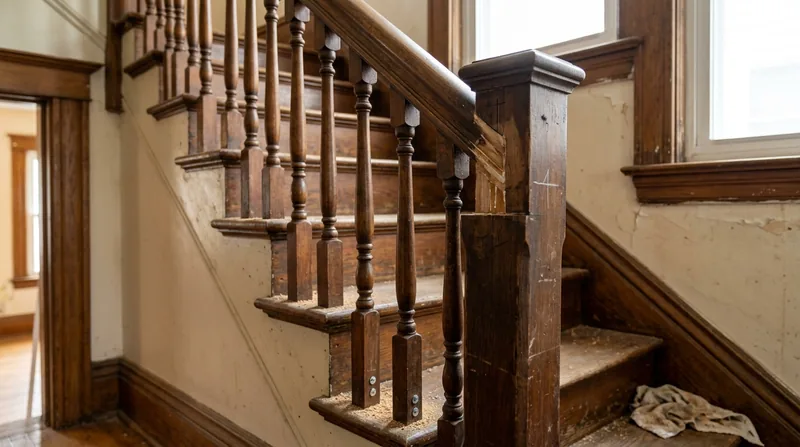




Buffalo's century-old wood-frame homes, Victorian mansions in Allentown and Elmwood Village, working-class two-family flats across the East Side, and post-war ranch homes throughout the suburbs all depend on sound staircases and railings to keep residents safe. Freeze-thaw cycles, heavy lake-effect snow, and the natural wear of daily use put real stress on stair stringers, treads, balusters, and handrails. Stair and railing repair in Buffalo is not a cosmetic fix, it is a structural and safety matter that demands the attention of a carpenter who understands how moisture, wood movement, and code compliance work together. We repair squeaky treads, tighten loose banisters, restore period railings, and install code-compliant handrails. When a stringer is sound, we reinforce it. When it is beyond repair, we replace it with new framing that meets current building standards. This page explains what we do, why it matters in Buffalo's climate, and what you can expect to invest.
Why Stair and Railing Repair Matters in Buffalo's Freeze-Thaw Climate
Buffalo's legendary snowfall, freeze-thaw cycles, and seasonal moisture swings take a toll on wood staircases faster than in milder climates. Stringers, the angled support beams that carry the weight of treads and risers, absorb moisture from winter ice dams, snow melt, and seasonal humidity changes. Over time, this cycling causes the wood to swell and shrink, opening seams, loosening fasteners, and creating the squeaks and movement that signal a staircase losing its grip. Railings and balusters face the same pressure, especially on exterior stairs and porches where UV exposure and moisture concentration accelerate decay and fastener failure. A loose or squeaky staircase is not just annoying, it is a safety issue. Loose treads can shift underfoot, and a railing that moves in your hand is not a reliable grab point if you stumble.
- Inspect treads and stringers annually for movement, squeaks, or soft spots that signal moisture penetration or wood decay.
- Tighten fasteners, repair or sister damaged stringers, and replace worn treads before the entire staircase becomes unstable.
- Check railings and balusters for loose connections and verify that handrails meet current building code height and grip requirements.
- Address ice dam moisture and snow-load stress on exterior stairs and landings before structural damage spreads to the rim joist or band board.
Early repair of a squeaky staircase or a loose railing prevents costlier structural work down the road and keeps your home safe through Buffalo's brutal winters.
Key info: A Victorian staircase in Elmwood Village or a wood-frame two-family flat on the East Side often carries original stringers and balusters that are 80 to 100 years old. These stairs can be repaired and reinforced rather than replaced entirely, preserving period character while meeting modern safety codes. We assess the wood grain and fastening before recommending replacement.
For guidance on stair safety codes and handrail requirements in Buffalo, the City of Buffalo Building Department publishes local amendments to the New York State Building Code. Permits are required for structural stair alterations and railing installations, and we work with your local inspector to ensure compliance.
How We Repair and Rebuild Staircases in Buffalo
Our process begins with a careful inspection of the entire staircase. We walk the treads, check the stringers for soft spots or movement, test every baluster connection, and examine fasteners and joints. We look for signs of moisture, wood decay, or structural shift. Once we understand the damage, we propose a repair plan that is honest about what can be fixed and what must be replaced. Many Buffalo staircases can be repaired without full replacement, saving time and cost while keeping the original character of the home intact.
- We reinforce loose or cracked stringers by sistering new lumber alongside the original beam and fastening both to the rim joist and landing.
- We replace individual treads or risers if they are warped, cracked, or showing signs of decay, matching the original wood species and finish where possible.
- We tighten or replace balusters, newel posts, and handrails, verifying that all connections meet current building code for load and safety.
- We install or upgrade handrails to meet New York State Building Code requirements for height, diameter, and continuous grip support.
The entire repair process is documented so you can share details with your homeowner insurance or building inspector. If your staircase is part of a larger structural concern, such as a sagging floor or a compromised rim joist, we coordinate with floor joist and subfloor repair to address the root cause.
Local example: A homeowner in Kenmore noticed her basement stairs had begun to sag and squeak. We inspected the stringers, found minor soft spots from seasonal moisture but no active decay, and sistered the stringers with pressure-treated lumber. We also tightened all balusters and replaced three worn treads. The job took two days and cost less than a full staircase rebuild. The stairs are now solid and safe for another 20 years.
| Approach | Description | Best for |
|---|---|---|
| Tightening and reinforcement | We tighten fasteners, glue loose joints, and add shims or brackets to eliminate movement without replacing structural members. | Squeaky treads, loose balusters, minor fastener failure, and seasonal movement in otherwise sound wood. |
| Sistering stringers | We fasten new pressure-treated or dimensional lumber alongside the original stringer to share the load and reinforce a cracked or slightly soft beam. | Sagging stairs, cracked stringers, minor wood decay in load-bearing beams, and preservation of period character. |
| Tread and riser replacement | We remove worn or damaged treads and risers and install new ones, matching the original wood species and finish profile where the staircase is visible. | Warped or cracked treads, stains and damage to finished stairs, and worn carpet or vinyl treads in active use. |
| Handrail and railing installation | We install new handrails, balusters, and newel posts to meet New York State Building Code, using traditional or contemporary materials and fastening methods. | Missing or inadequate railings, loose balusters, and code-compliance requirements for interior or exterior stairs. |
| Full staircase rebuild | We remove and replace an entire staircase when stringers are severely decayed, the structure is unsafe, or the homeowner wishes to alter the layout or pitch. | Severe wood rot, unsafe stairs, major structural shifts, and custom designs for new openings or landings. |
Stair and Railing Repair Cost in Buffalo: What to Expect
The cost of stair and railing repair in Buffalo ranges widely depending on the scope of damage, the size of the staircase, and whether the stringers can be reinforced or must be replaced. A straightforward repair, such as tightening fasteners and replacing a few treads, often starts around $600 to $1,200. Sistering a cracked or sagging stringer typically runs $1,500 to $3,500, depending on stringer length and access. A full staircase rebuild, including new stringers, treads, risers, and railings to code, can range from $4,000 to $8,000 or more, depending on materials, finish, and complexity. Exterior stairs, basement stairs, and staircases with tight clearances or unusual geometry cost more because they demand careful framing and may require structural engineering or permits.
The best way to get a realistic price is to request a free estimate. We inspect the staircase, identify the damage, and propose a repair plan with a firm quote. We also explain what factors drive cost, such as wood species, access to stringers, whether the job requires a permit, and whether the stairs are interior or exterior. Visit our pricing overview for guidance on other carpentry services, or call us at (716) 322-4288 to schedule your no-obligation inspection.
What to Look for When Hiring a Stair and Railing Repair Contractor Near Buffalo
Finding a trustworthy carpenter for stair and railing work is critical because the quality of the repair directly affects your safety. A good contractor will explain what is wrong with your staircase in plain language, propose repair before replacement, and verify that all work meets building code. Here are the key things to verify before you hire.
- Confirm that the contractor is fully insured and carries general liability and workers compensation coverage for your protection.
- Ask for references from recent stair and railing jobs, and call those homeowners to ask about the quality of work and whether the project stayed on schedule and budget.
- Verify that the contractor understands Buffalo's building code and can obtain or work with permits if your staircase repair requires one (most structural stair work does).
- Get written estimates from at least two contractors so you can compare the scope, materials, and price before committing to the job.
- Check whether the contractor is familiar with period staircases in Buffalo's Victorian and historic homes, especially if you want to preserve original character.
A contractor who takes time to inspect your staircase carefully, explains the damage without pressure, and provides a clear written estimate is worth the conversation. Ready to move forward? Contact us for a free estimate and we will respond within 24 hours.
Stair & Railing Repair in Buffalo: Pricing Guide
| Service | Price | Details |
|---|---|---|
| Tightening, fastener repair, and minor reinforcement | Starting at $600 | Squeaky treads, loose balusters, and fastener tightening on sound wood frame stairs |
| Tread or riser replacement | Starting at $800 per tread | Worn or damaged treads and risers, material and finish matched to original staircase design |
| Sistering and stringer reinforcement | Starting at $1,500 | Cracked or sagging stringers, length of stringer and wood species affect the final price |
| Handrail and railing installation | Starting at $1,200 | Code-compliant handrails and baluster replacement, materials and linear feet of railing determine cost |
| Full staircase rebuild | On estimate | Severe wood decay, unsafe stairs, and custom designs require on-site inspection and structural assessment |
| Free estimate and inspection | No charge | Response within 24 hours, no obligation to book, detailed written proposal with scope and materials |
Indicative pricing, the exact cost depends on square footage, finish, and site access. Free personalized estimate within 24h at (716) 322-4288.


