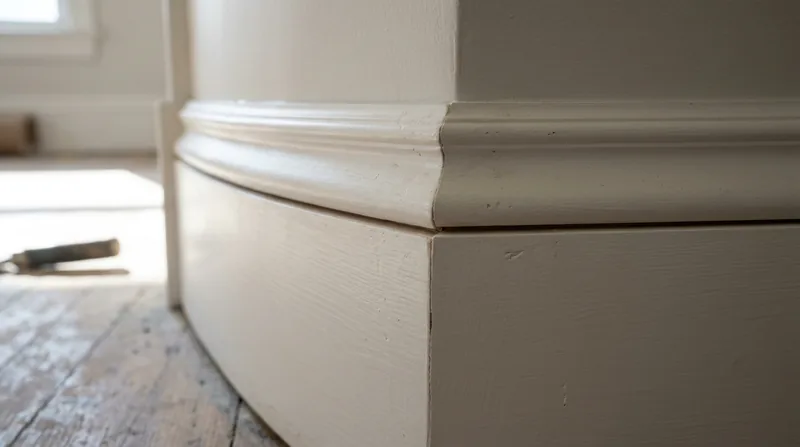




Finish & Trim Carpentry in Buffalo demands precision, patience, and an eye for detail that separates real craftwork from quick fixes. Buffalo's architectural heritage spans Victorian mansions in Allentown and Elmwood Village to Frank Lloyd Wright's Darwin Martin House in the Parkside neighborhood, working-class two-family homes across the East Side, brick bungalows in North Buffalo and Kenmore, and post-war ranches throughout the suburbs. Every one of these homes relies on trim carpentry to close the gap between structure and finish, and when that trim is done right, it lasts decades. When it's done poorly, it telegraphs every mistake. We handle casing, crown molding, baseboard, wainscoting, custom paneling, and built-in shelving across Buffalo, Amherst, Cheektowaga, Tonawanda, West Seneca, Hamburg, Orchard Park, and the surrounding communities. The work is visible, permanent, and measured in tight miters, scribed fits, and consistent reveals.
Why Finish Carpentry Matters in a Buffalo Home
Buffalo's homes sit on flat glacial terrain and endure legendary lake-effect snowfall and severe freeze-thaw cycles. That climate hammers roofs, porches, and decks, but it also stresses the interior: wood shrinks and swells with humidity swings, plaster cracks, and door frames shift. Finish carpentry is not decorative padding. It's the seal between rooms, the frame that holds a door plumb, and the detail that either hides or exposes every structural movement in your house. Sloppy trim work makes a fine home look cheap. Tight trim work makes an old home feel solid and new.
- Casing and trim conceal gaps and allow for wood movement without exposing drywall or framing.
- Crown molding and baseboard anchor the eye and make rooms feel intentional and finished.
- Custom built-ins and shelving add storage and character without the cost of a full renovation.
- Wainscoting and wall paneling protect plaster from moisture and freeze-thaw damage in older homes.
- Door and window casings that are scribed and coped to fit irregular walls and plaster preserve the integrity of original plaster work.
Each of these details requires the same carpenter to measure twice, cut once, and fit the pieces to the house as it actually is, not as the plans said it should be.
Key info: Many Buffalo homes have original plaster walls and ceilings that are uneven by modern standards. Off-the-shelf trim does not fit. Scribing, coping, and custom cuts are not optional extras. They are the foundation of professional finish work in a century-old home.
How We Approach Finish & Trim Carpentry in Buffalo Homes
We start with a walk-through and a conversation about what you want the space to feel like and what the existing walls, floors, and ceilings actually allow. We measure the wall, check for plumb and square, and identify where the house has settled or moved. We then select materials, cut samples, and show you the fit before we commit to the full install. We work methodically, finishing one section completely before moving to the next, so you see progress and can flag any concerns early.
- We meet on-site, measure the space, and discuss your goals for finish, style, and timeline.
- We select wood species (typically clear pine, poplar, or hardwood) and review grain, color, and stain samples with you.
- We cut and fit the first section as a proof of concept, so you can see the exact look and feel before we proceed to the rest of the room.
- We install trim in logical sections, nailing, gluing, and filling as we go, so the work is complete and ready to paint or stain.
- We sand, fill nail holes, and prepare all surfaces for finish, leaving your painter or stain crew with a clean, ready surface.
This approach takes longer than nailing up pre-made trim, but it means the work fits your house, not the other way around.
Example: A homeowner in Elmwood Village had original plaster walls and a floor that sloped toward the center of the house. Stock baseboards would have left a half-inch gap at the top. We scribed the baseboard to follow the wall contour, so it sits tight from floor to ceiling and looks as if it was always there.
Finish Carpentry Methods and Materials
The method depends on the space, the existing condition, and your budget. Some jobs call for solid hardwood trim; others work better with paint-grade pine or composite materials. Some walls are plumb and square and accept trim straight off the saw. Others require scribing, coping, or custom milling. We explain the trade-offs and recommend the approach that will look right and last.
| Approach | Description | Best for |
|---|---|---|
| Scribing | Cut the trim profile to match an irregular wall or ceiling using a scribe tool and a coping saw. | Plaster walls, uneven ceilings, original plaster in older Buffalo homes. |
| Coping | Cut the end of one trim piece to fit the profile of an adjacent piece, typically at inside corners. | Crown molding, baseboard, and complex trim runs where a miter would show gaps. |
| Mitering | Cut trim at 45-degree angles and join at corners for a seamless, clean look. | Outside corners, returns, and modern or contemporary spaces where gaps are not acceptable. |
| Custom Milling | Machine or hand-shape wood to a custom profile that matches existing trim or meets design goals. | Restoration of original trim profiles, one-of-a-kind built-ins, and high-end finish work. |
| Paint-Grade Assembly | Use pine, poplar, or composite trim, fill gaps and nail holes with wood filler, and prepare for paint. | Budget-conscious work, spaces that will be painted, and modern homes where stain is not required. |
| Stain-Grade Installation | Use clear hardwood (oak, maple, cherry), minimize filler, sand to a high grit, and prepare for stain or natural finish. | Homes where wood grain and color are part of the design, high-end finishes, and built-ins. |
The choice between these methods rests on your existing walls, your budget, and what the finished space needs to look like. We help you make that decision and execute it cleanly.
Finish & Trim Carpentry Cost in Buffalo: What to Expect
Finish carpentry pricing depends on the complexity of the fit, the material you choose, the linear footage or square footage of the space, and how much of the work is straightforward versus custom. A simple baseboard run in a square room with plumb walls costs less than crown molding in a room with ceiling peaks and plaster waves. A built-in bookcase with adjustable shelving and a face frame costs more than a single shelf. We provide a free estimate after an on-site visit, so you know the exact scope and price before we start.
Typical projects in Buffalo range from $550 to $3,500 or more, depending on the job. A straightforward casing and baseboard package for one room usually starts around $550 to $1,200. Crown molding runs higher because it requires more layout, fitting, and precision. Custom built-ins or extensive wainscoting can run $2,000 to $5,000 or more. The full pricing guide breaks down common scenarios, but the best way to know your cost is to call us at (716) 322-4288 for a free, no-obligation estimate.
Factors that affect cost include the number of linear feet of trim, the complexity of the fit (plumb walls are faster than uneven plaster), the material (clear hardwood costs more than paint-grade pine), and the finish (stain-grade work requires more care than paint-grade). Travel within Buffalo and the surrounding service areas is included in our estimate, with no separate mileage fee.
What to Look for When Hiring a Finish Carpentry Contractor Near Buffalo
Finding the right carpenter is as important as the work itself. You want someone who listens, measures carefully, communicates clearly about what is and is not possible, and does not oversell or rush. A good carpenter will tell you if a wall is too uneven for standard trim and offer a solution. A bad one will install trim that gaps and gaps over time. Here is what to check:
- Ask if the same carpenter will do the work from start to finish, not a crew that changes between jobs.
- Request references from recent projects in Buffalo or nearby communities and call at least two.
- Ask to see examples of work in homes similar to yours, especially if yours has original plaster or uneven walls.
- Confirm that the contractor is fully insured and can provide a certificate of insurance before work begins.
- Get estimates from at least two contractors and ask what is included in the price (material, labor, prep, finish).
- Check that the contractor is registered with the City of Buffalo and familiar with local building code if permits are required.
Most finish carpentry does not require a permit, but if your project involves structural changes or affects a protected historic home in a district like Allentown or Parkside, check with the Buffalo Building Department or your local historic preservation office before you start. We can help you understand what applies to your job and connect you with the right resources.
When you are ready to move forward, contact Buffalo Carpentry for a free estimate. We respond within 24 hours and are happy to answer questions about your specific project, timeline, and budget.
Finish & Trim Carpentry in Buffalo: Pricing Guide
| Service | Price | Details |
|---|---|---|
| Baseboard or casing, single room | Starting at $550 | Linear feet of trim, wall condition (plumb vs. uneven), and material selection drive the final cost |
| Crown molding installation | Starting at $800 | Requires layout, precise miters, coping at inside corners, and ceiling fit; complexity increases cost significantly |
| Custom built-in shelving or wainscoting | Starting at $1,500 | Depends on square footage, number of shelves, face frame detail, and whether the unit is paint-grade or stain-grade |
| Multi-room trim package or extensive finish work | On estimate | Scope, material, and complexity require an on-site visit to quote accurately and fairly |
| Travel | Included | No separate mileage or travel fee within Buffalo and surrounding service areas |
| Estimate | Free | On-site visit, no obligation to book; response within 24 hours at (716) 322-4288 |
Indicative pricing, the exact cost depends on square footage, finish, and site access. Free personalized estimate within 24h at (716) 322-4288.


