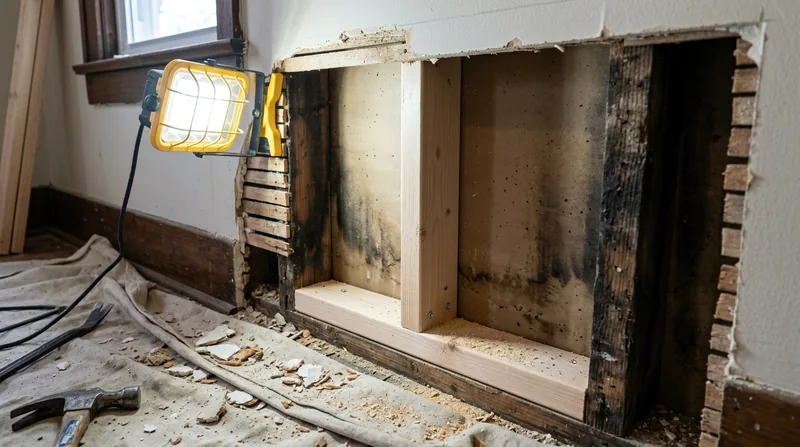




Termites are rare in Buffalo, but when they strike, the damage they leave behind demands immediate repair. After your pest inspector confirms an infestation and treatment begins, the termite damage repair work falls to a carpenter. We replace compromised studs, sill plates, floor joists, subfloor sections, and trim across Buffalo's century-old wood-frame homes, from the grand Victorians of Elmwood Village to the working-class two-family homes of the East Side and the post-war ranches of Kenmore and North Buffalo. Unlike the pest control phase, which eliminates the insects, our job is to restore full structural integrity to the wood your home depends on. We work from your pest inspection report and restore the frame so your house stands solid again.
Why Termite Damage Repair Matters in Buffalo's Older Wood-Frame Homes
Termite damage is uncommon in Western New York compared to warmer climates, but when it occurs, it concentrates in the wood members that bear load and keep your home dry. A termite colony can hollow out a sill plate, weaken floor joists, or compromise studs in ways that are invisible until a structural failure forces the issue. Buffalo's dominant carpentry concern is actually freeze-thaw damage and ice-dam moisture from our legendary lake-effect snowfall, but termite damage, though less frequent, follows the same principle: wood that loses its integrity costs more to fix the longer you wait. We catch these problems early, assess what can be repaired and what must be replaced, and restore the member so it carries its load again.
- We identify which structural members are compromised by comparing your pest report to the framing we expose.
- We remove and replace damaged studs, joists, sill plates and blocking without over-building or unnecessary full-frame replacement.
- We document the repair for your insurance claim, photographing the damage before and the restored wood after.
- We coordinate with your pest control contractor to ensure the treatment window and our repair timeline align.
- We pull any required permits for structural work, following the Buffalo Building Department guidelines.
The goal is to restore your home to safe, functional condition and help you move forward after treatment.
Key info: Buffalo's wood-frame homes, particularly the Victorians in Allentown and the Polish flats across the East Side, depend on sound sill plates and floor joists to shed moisture and carry load through our freeze-thaw winters. Termite damage that weakens these members can compound over time, especially if moisture from ice dams or roof leaks keeps the wood wet. Early repair prevents secondary damage and keeps repair costs predictable.
For more on wood damage repair in Buffalo, see our guide to wood rot and dry rot repair, which addresses similar structural concerns.
For official guidance on permits and structural work in Buffalo, consult the City of Buffalo Department of Permits and Licensing.
How We Repair Termite Damage: Our Process in Buffalo
After your pest control contractor has treated the infestation, the wood repair begins. We start by walking the affected areas with your pest report in hand, identifying every member that shows damage. We expose the framing as needed, measure the extent of the loss, and decide whether each piece can be reinforced or must be replaced. For studs and blocking, we often sister a new member alongside the damaged one, restoring load capacity without unnecessary demolition. For sill plates, rim joists, and floor joists that bear the entire weight of the floor system, replacement is the honest answer. We remove the old wood, install new pressure-treated or solid framing, and tie it back into the existing structure so it functions as one system again.
- We photograph the damage in place, documenting the scope for your insurance adjuster and your own records.
- We expose the framing by removing drywall, flooring or trim only as far as the damage extends, keeping disruption minimal.
- We assess each damaged member: studs and blocking may be sistered, while sill plates and joists are typically replaced in sections.
- We install new lumber, securing it to existing framing with bolts, nails or structural screws per code requirements.
- We restore drywall, flooring and trim to match the existing finish, leaving no trace of the repair except a sound, dry home.
The entire process is transparent, and we explain what we find and why we recommend each repair before we begin.
Local example: A homeowner in Tonawanda called us after her pest inspector found termite damage in the rim joist and one floor joist in her 1950s ranch home. We exposed the joist, confirmed the hollow galleries, and replaced the damaged section with a new pressure-treated 2x10, sistering it to the existing rim joist with bolts. The repair took one day, cost less than replacing the entire joist system, and the floor was level and solid again. Her insurance covered most of the cost.
For more on floor joist and subfloor repair, see our floor joist and subfloor repair service.
Repair Methods and When to Use Each
| Approach | Description | Best for |
|---|---|---|
| Sistering | Install a new stud or blocking member alongside the damaged one, bolting or nailing them together to act as one unit. | Non-load-bearing studs, blocking, and bracing where the original member retains some strength. |
| Section Replacement | Remove the damaged portion of a joist, sill plate, or rim joist and install new pressure-treated lumber, bolting it to the existing framing on both sides. | Floor joists, sill plates, and rim joists where damage is localized and the rest of the member is sound. |
| Full Member Replacement | Remove and replace an entire joist, sill plate, or stud when damage is extensive or the member has lost more than 30 percent of its cross-section. | Severe damage, multiple joists in sequence, or when the cost of section replacement approaches the cost of replacement. |
| Temporary Shoring | Install adjustable posts or shores to support the floor or upper framing while we remove and replace the damaged member below. | Any load-bearing repair where the upper structure cannot be left unsupported during removal. |
Termite Damage Repair Cost in Buffalo: What to Expect
The cost of termite damage repair in Buffalo depends on how much wood is compromised, which members are affected, and whether access requires opening walls or floors. A single damaged stud or section of blocking may run from $1,200 to $2,500 for the repair, material, and finish work. Damage to a floor joist or sill plate typically costs $2,500 to $5,000 per section, depending on how many joists are affected and whether temporary shoring is needed during the repair. A full joist replacement or multiple members in sequence can reach $6,000 to $12,000 or more. The factors that move the price are the size of the damaged area, the depth of the framing (a 2x10 joist costs more to replace than a 2x8), and whether the repair requires opening finished floors or ceilings to access the damage.
Get 2 to 3 estimates from local carpenters before you commit. Each should walk the job with your pest report, explain what they recommend, and give you a clear price for the work. Insurance often covers termite damage repair, so document your pest inspection and have us photograph the damage before we begin. For a detailed pricing overview, visit our full pricing page.
Termite Damage Repair Near Me: What Buffalo Homeowners Should Know When Hiring a Carpenter
When you're looking for a carpenter to repair termite damage in Buffalo, start by confirming that your contractor is fully insured and holds a valid City of Buffalo Contractor License under Chapter 144. Ask for references from recent termite damage repairs, not just general carpentry, because this work requires careful framing knowledge and attention to structural detail. Get multiple estimates and ask each contractor whether they recommend repair or replacement for each damaged member. Permits are required for structural work in Buffalo, so make sure your contractor includes permit costs in the estimate and coordinates with the Building Department. If your home is in a historic district like Elmwood Village or Allentown, or if you have HOA restrictions, confirm that your repair plan complies with those guidelines before you start.
- Verify full insurance coverage and ask to see a certificate of insurance naming your address as additional insured.
- Request at least three references from homeowners who had termite damage repairs completed in the last two years.
- Ask whether the contractor will pull permits and handle Building Department inspection, or whether you need to do so separately.
- Confirm the timeline for the repair, including how long access to the damaged areas will be needed and when the space will be finished.
- Get a written estimate that breaks out labor, materials, and any permit or inspection costs, so you know exactly what you are paying for.
We handle all of this on every job. If you are ready to move forward, call us at (716) 322-4288 or contact us online for a free, no-obligation estimate.
Termite Damage Repair in Buffalo: Pricing Guide
| Service | Price | Details |
|---|---|---|
| Single stud or blocking repair | Starting at $1,200 | Includes material, labor, drywall patching and finish; cost rises if multiple studs or if access requires opening finished walls |
| Floor joist or sill plate section replacement | Starting at $2,500 | Includes temporary shoring, joist removal and installation, bolting to existing framing, subfloor and flooring restoration per section |
| Multiple joists or extensive sill plate damage | Starting at $5,000 | Covers multiple sections, extended temporary shoring, and coordination with pest control contractor to ensure treatment and repair timeline align |
| Full joist or structural member replacement | On estimate | Requires on-site inspection to determine if full replacement is necessary and whether load-bearing wall or beam support is needed for the repair |
| Travel and site visit | Included | No separate call-out fee or mileage charge within Buffalo and surrounding service areas; free estimate within 24 hours |
| Free estimate | No charge | We walk the job with your pest report, photograph the damage, and provide a detailed written estimate before any work begins |
Indicative pricing, the exact cost depends on square footage, finish, and site access. Free personalized estimate within 24h at (716) 322-4288.


