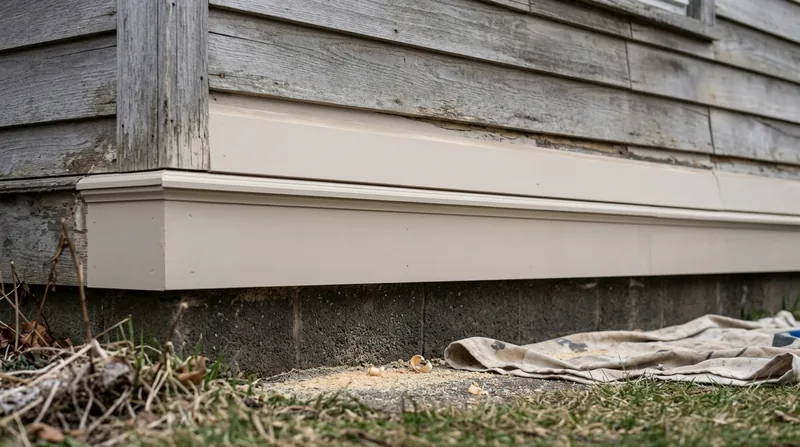




Buffalo's wood-frame housing stock, from Victorian mansions in Allentown to working-class two-family homes on the East Side and post-war ranches across the suburbs, faces a relentless threat: freeze-thaw cycles and lake-effect moisture. Winter snow loads, ice dams, and the region's legendary precipitation create ideal conditions for wood decay in sill plates, rim joists, floor framing, and exterior trim. Wood rot and dry rot repair is not cosmetic work here, it is structural maintenance that keeps century-old homes standing. We cut out decayed wood, treat surrounding framing, and rebuild with rot-resistant lumber, a permanent repair that addresses the root cause rather than hiding the damage.
Why Wood Rot & Dry Rot Repair Matters in Buffalo's Freeze-Thaw Climate
Buffalo sits on flat glacial terrain with direct exposure to Lake Erie and Niagara River moisture. Winter temperatures swing above and below freezing repeatedly, forcing water into wood grain, freezing, thawing, and expanding the fibers until they crack and separate. Mature elm, oak, and maple street trees shade homes, trapping moisture in walls and soffits. Ice dams back water under roofing and into rim joists. Porches and decks bear snow load and freeze-thaw stress every season. Unlike warmer climates where dry rot is driven by fungal spore and poor ventilation, Western New York wood decay is primarily a moisture-and-freeze problem. Left unaddressed, rot spreads into structural members, compromises load paths, and creates conditions that demand expensive replacement rather than repair.
- We inspect sill plates, rim joists, and floor joists for soft spots and discoloration that signal active or past water intrusion.
- We trace moisture pathways, ice dams, failed caulk, missing flashing, grading issues, to stop decay at the source.
- We remove all decayed wood back to sound grain and treat surrounding framing with a protective finish.
- We rebuild with pressure-treated or rot-resistant species and seal the repair to prevent future water entry.
- We document the work and damage photographs to support insurance claims when water events trigger repairs.
Addressing wood rot promptly protects your home's structural integrity and prevents secondary damage to insulation, drywall, and flooring.
Key info: Buffalo's Building Department (Chapter 144, City Code) requires permits for structural repairs involving load-bearing members such as rim joists, floor joists, and beam replacement. Permits ensure the work meets code and protects your property value. We coordinate with the city on your behalf.
For more on structural wood repairs, see our page on floor joist and subfloor repair in Buffalo.
How We Repair Wood Rot in Buffalo Homes: Our Step-by-Step Process
Every wood rot repair begins with a careful inspection to understand the scope and cause. We use moisture meters, probes, and visual assessment to map the extent of decay and identify the water source. Once we know what we are dealing with, we develop a repair plan that separates damaged wood from sound wood, treats the framing around the repair, and rebuilds with materials that will last in Buffalo's climate. The same carpenters who diagnose the problem do the repair work, so there is no disconnect between the estimate and the finished job.
- We isolate the repair area and remove decayed wood using chisels, saws, and sanders, cutting back to sound grain.
- We inspect and treat surrounding wood with a protective finish to arrest decay and prevent spread.
- We measure and cut replacement framing from pressure-treated lumber, rot-resistant species, or epoxy-consolidated wood, depending on the member and load.
- We install the new wood, fasten it securely, and ensure it integrates with the existing frame without gaps or voids.
- We seal the repair with caulk and finish to shed water and match the surrounding surface.
- We address the moisture source: regrade, install flashing, repair gutters, or caulk cracks as needed to prevent recurrence.
A typical rim joist or sill plate repair in a Buffalo bungalow takes one to three days, depending on access and the extent of decay.
Local example: A Kenmore homeowner noticed soft spots in the rim joist above the basement rim. We opened the wall, found rot from a failed gutter downspout that had been pouring water into the rim for years. We removed the decayed rim, installed a new pressure-treated rim joist, sealed it, and repositioned the downspout to drain away from the foundation. Cost was $1,400. Without the repair, water would have continued into the floor joists and subfloor, a $4,000+ replacement job.
For larger structural issues, see beam replacement and load-bearing wall removal.
Wood Rot Repair Methods and Materials
| Approach | Description | Best For |
|---|---|---|
| Full removal and replacement | We cut out all decayed wood and install new pressure-treated or rot-resistant lumber, fully fastened and sealed. | Structural members (rim joists, sill plates, floor joists, headers) where decay is extensive or load-bearing integrity is compromised. |
| Epoxy consolidation | We inject epoxy resin into partially decayed wood to harden and stabilize it, then seal the surface to prevent future moisture entry. | Non-structural trim, fascia, soffit, and decorative members where the wood retains 50% or more of its original density and appearance matters. |
| Sister joist or beam installation | We install a new pressure-treated joist or beam alongside a weakened or partially decayed member, fastening them together to share the load. | Floor joists and beams where the existing wood is structurally compromised but removal would be disruptive or costly. |
| Moisture source control | We repair gutters, install or replace flashing, caulk gaps, regrade soil, and improve drainage to eliminate standing water and freeze-thaw cycles. | All repairs. Stopping the water is as important as removing the rot; without it, new wood will decay on the same schedule as the old. |
Wood Rot & Dry Rot Repair Cost in Buffalo: What to Expect
Wood rot repair costs depend on the location of the decay, the extent of damage, access, and the framing member involved. A small rim joist repair or isolated trim replacement starts around $650 to $1,200. A full sill plate replacement or extensive floor joist work runs $2,000 to $4,500. Large structural jobs, such as sistering multiple joists or replacing a beam, can exceed $5,000 and require a site estimate. Moisture source repairs, gutter work, flashing, caulking, often add $300 to $800 depending on complexity.
The biggest cost drivers are the size and depth of the decayed area, whether the member is load-bearing, and how difficult it is to access. A rim joist rot in a finished basement is more expensive than the same rot in a crawlspace because we must open walls and restore finishes. If the decay has spread into multiple joists or structural members, the job becomes larger and more complex. Getting two or three estimates from local carpenters is smart; it protects you from overpricing and ensures you understand what the repair entails.
We offer a free, no-obligation estimate within 24 hours of your call. We measure the damage, photograph it, identify the moisture source, and provide a written scope and price. If you choose to move forward, we schedule the work and keep you informed throughout. For detailed pricing on common repairs, visit our full pricing page.
Wood Rot & Dry Rot Repair Near Me: What Buffalo Homeowners Should Know When Hiring a Carpenter
Hiring the right carpenter for wood rot repair is as important as the repair itself. You want someone who understands Buffalo's climate, can identify the moisture source, and has the skill to rebuild framing that will last decades. A good contractor will explain the problem in plain language, show you the decay, discuss why the repair is necessary, and stand behind the work with a warranty.
Before you hire, verify that the contractor is fully insured with general liability and workers compensation coverage. Ask for references from recent jobs in Buffalo, Amherst, Cheektowaga, or nearby communities. Check whether the work requires a permit from the Buffalo Building Department (structural repairs typically do) and confirm the contractor will handle permitting. If your home is in a historic district or subject to HOA rules, ask whether the repair meets those requirements. Get written estimates from at least two contractors so you can compare scope, materials, timeline, and price. Never choose solely on price; the cheapest estimate often reflects shortcuts or inexperience that will cost you later.
Call us at (716) 322-4288 for a free estimate. We have been repairing wood rot in Buffalo since 2016, and we can walk you through the process step by step. Visit our contact page to request an appointment or send photos of the damaged area.
Wood Rot & Dry Rot Repair in Buffalo: Pricing Guide
| Service | Price | Details |
|---|---|---|
| Small trim or fascia rot repair | Starting at $650 | Isolated decay in non-structural trim, soffit, or fascia; includes removal, epoxy consolidation or replacement, and sealing |
| Rim joist or sill plate repair | Starting at $1,400 | Partial or full joist replacement, structural fastening, and moisture source control; varies by length and access difficulty |
| Floor joist or beam repair | Starting at $2,200 | Single joist replacement, sistering, or epoxy consolidation; includes load-bearing assessment and permit coordination if required |
| Multi-joist or extensive structural work | On estimate | Decay spanning multiple framing members, subfloor damage, or load-bearing wall involvement requires on-site inspection and detailed scope |
| Moisture source repairs | Starting at $300 | Gutter repair, flashing installation, caulking, or grading adjustment to eliminate water entry and prevent future decay |
| Free estimate and travel | No charge | Response within 24 hours across Buffalo and surrounding service areas; no obligation to book, full transparency on scope and cost |
Indicative pricing, the exact cost depends on square footage, finish, and site access. Free personalized estimate within 24h at (716) 322-4288.


